


The slogan ‘Save the bees’ is everywhere. So why aren't they saved?

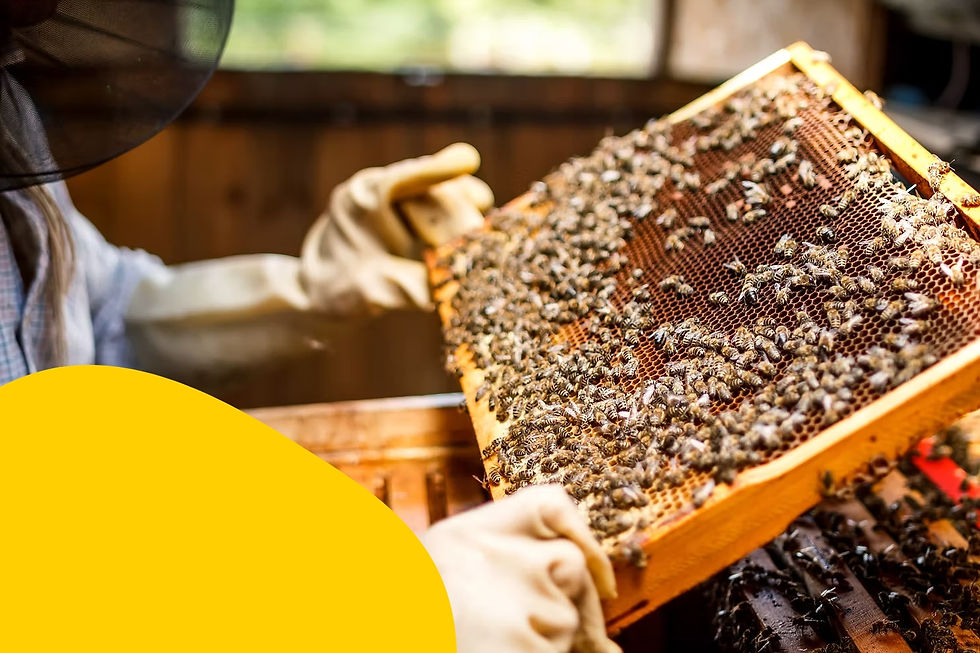
Anton Janša, born 20 May 1734, is credited with founding modern beekeeping. The United Nations chose his birthday to mark World Bee Day. Two-and-a-half centuries later, the science on bee decline is unambiguous. The communication around it, however, is not.
A slogan is not a message
Somewhere between headlines about bee colony collapse disorder and tote bags, something happened. ‘Save the bees’ became wallpaper. The slogan is on coffee cups, bumper stickers and branded honey jars sold at airport gift shops. But the problem is not that it is everywhere. The problem is that it encourages action without saying what specific action or actions people should take.
This is not trivial. Managed honeybee colonies have declined significantly in many countries. Wild bee populations face even greater pressure. They are less visible, less charismatic and far more biodiverse. Although the science is compelling, the public response to it is not. It’s worth looking at why.
What slogans do, and what they stop doing
A slogan works in the early phase of a campaign. It compresses a complex issue into something repeatable and emotionally accessible. In the right moment, that compression can create opportunity.
The problem comes when the slogan replaces the message rather than introducing it. Repeat a phrase often enough without adding anything to it and people stop hearing it. They register that it exists, but they don’t act on it. ‘Save the bees’ is now received less as a call to action and more as evidence that someone cares about bees in the abstract, requiring nothing of the reader at all.
The louder a message gets without adding meaning, the less it does. ‘Save the bees’ did not begin as a slogan. It began as a specific alarm raised by commercial beekeepers around 2005, when colony losses spiked and a cause needed a name. Beekeeping and pollinator groups started using the phrase. Greenpeace and other environmental organisations picked it up and spread it widely. By the time it became a hashtag, the specific concerns that generated it – a particular class of pesticides, a measurable rate of hive collapse, a traceable cause – had been replaced by a general sentiment.
The specificity deficit
Anton Janša understood something that most bee-related communications now miss. Beekeeping, done well, is exact. It requires knowing the difference between Apis mellifera and a solitary native species. It requires understanding colony behaviour, not just colony existence. It requires managing for particular conditions in particular places.
The ‘Save the bees’ slogan removes all of that. Bees become a single undifferentiated category in need of saving, rather than a diverse group of species with different ecologies, different threats and responses that vary by species and location. That generalisation makes action harder, not easier, because no one knows which bee, which threat, or which response is being referenced.
The infrastructure underneath the slogan
Getting people’s attention is the easy part. The harder work is giving them enough context for them to do something. A slogan can generate awareness. What comes next determines whether that awareness leads to action.
For bees, that infrastructure is largely absent in public communication. The difference between a managed honeybee and a native blue-banded bee rarely appears outside specialist media. The distinction between habitat loss and pesticide exposure as causes are rarely explained. The actionable responses are seldom presented alongside the slogan: reducing pesticide use in gardens, planting local native species and supporting policy changes to agricultural chemical regulation.
Without that context, public awareness enters a loop. People feel concern, find no clear direction to act on it, and move on. Every new report of bee decline briefly revives the slogan, but then it fades again, and nothing changes.
How to write about bees without losing the audience you already have
The challenge for science communicators working on this issue is not to abandon the emotional resonance bees carry. The challenge is to attach it to something actionable and precise.
That means choosing a specific bee, a specific threat and a specific context. It means writing about the blue-banded bee nesting in crumbling mortar walls rather than ‘pollinators’ in general. It means explaining that Australia has more than 1,700 native bee species, most of them solitary, none of them producing honey, and that almost none of them feature in mainstream bee communication.
It also means being honest about the purpose of slogans. They are entry points, not explanations. Used well, they open a door. The question is what you put behind that door.
World Bee Day and what it could be
World Bee Day was designed to draw attention to the role of bees in food systems and biodiversity. That is worth doing. An international day anchored to a specific historical figure carries more weight than most awareness campaigns begin with. Anton Janša brought rigour and observation to a practice previously run on folk wisdom and guesswork. That‘s a precedent to build on.
The opportunity is not to repeat a slogan that has lost its edge, but to add what it left out: which bee, which threat and which action.
That is, in the end, what Anton Janša did. He replaced assumption with precise observation. Science communication on this topic could do worse than follow his lead.
Need help turning a serious issue into clear, specific communication?
If your organisation works on environmental science, conservation or policy and needs communication that is more than a slogan, we can help. Contact us.


Comments